Behind the image
How the maps are made
Each Montage Map starts with automated shot-change detection. Software examines changes between video frames to identify likely edits. It is a useful first pass, but can miss dissolves, fades and cuts concealed by fast movement, such as whip-pans. It can also mistake changes within a shot for an edit.
That is why every detected edit point is reviewed, frame by frame where necessary. Missed cuts are added and false detections removed before the shot count and timing data are finalised.
End credits are excluded because they can distort average shot lengths and make comparisons misleading. As a result, the analysed duration may differ slightly from the film’s published running time.
Once the edits have been verified, the length of each shot is calculated and plotted in chronological order around a circular timeline. Longer blue spokes indicate longer shots; tightly packed short spokes reveal rapid cutting. The overall diameter of each map also varies according to the film’s duration.
The soundtrack is analysed separately to show changes in audio intensity, while colour samples taken throughout the film form the inner palette. Together, these layers trace the relationship between editing rhythm, sound and colour from beginning to end.
The aim is not to reduce editing to statistics, but to offer another way of looking at film structure. The maps become especially interesting when comparing styles across decades — for example, Citizen Kane and Whiplash.
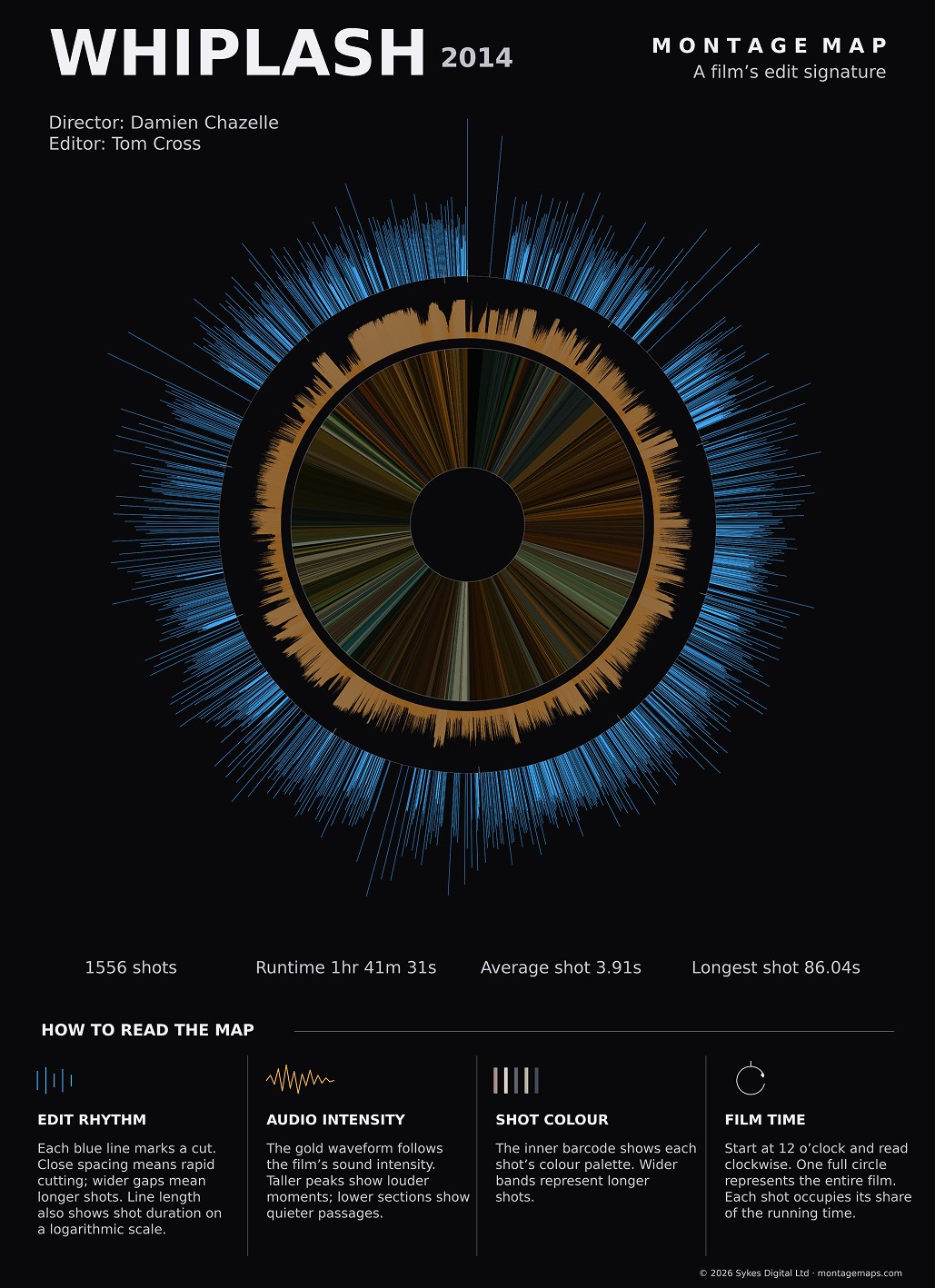
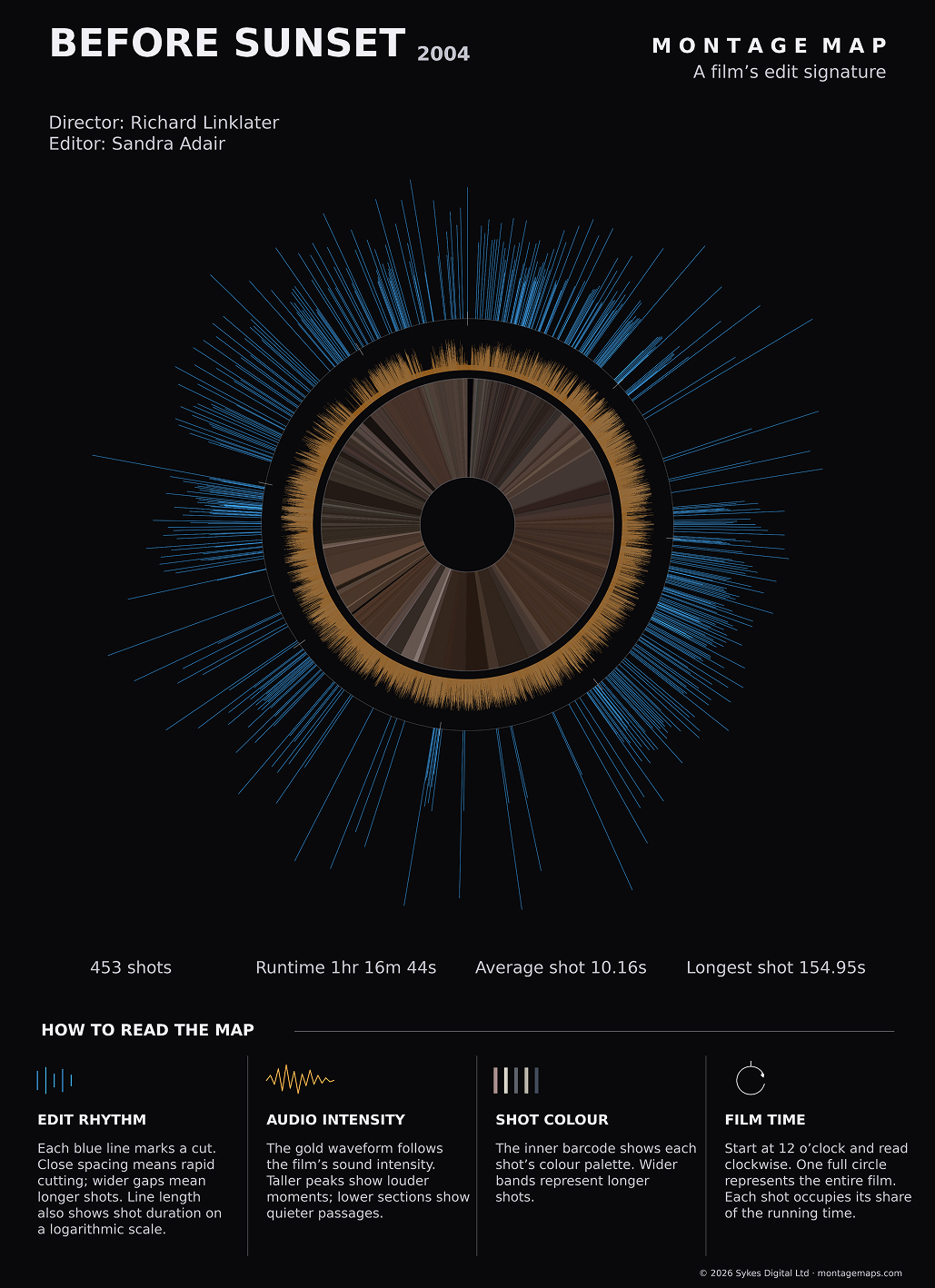
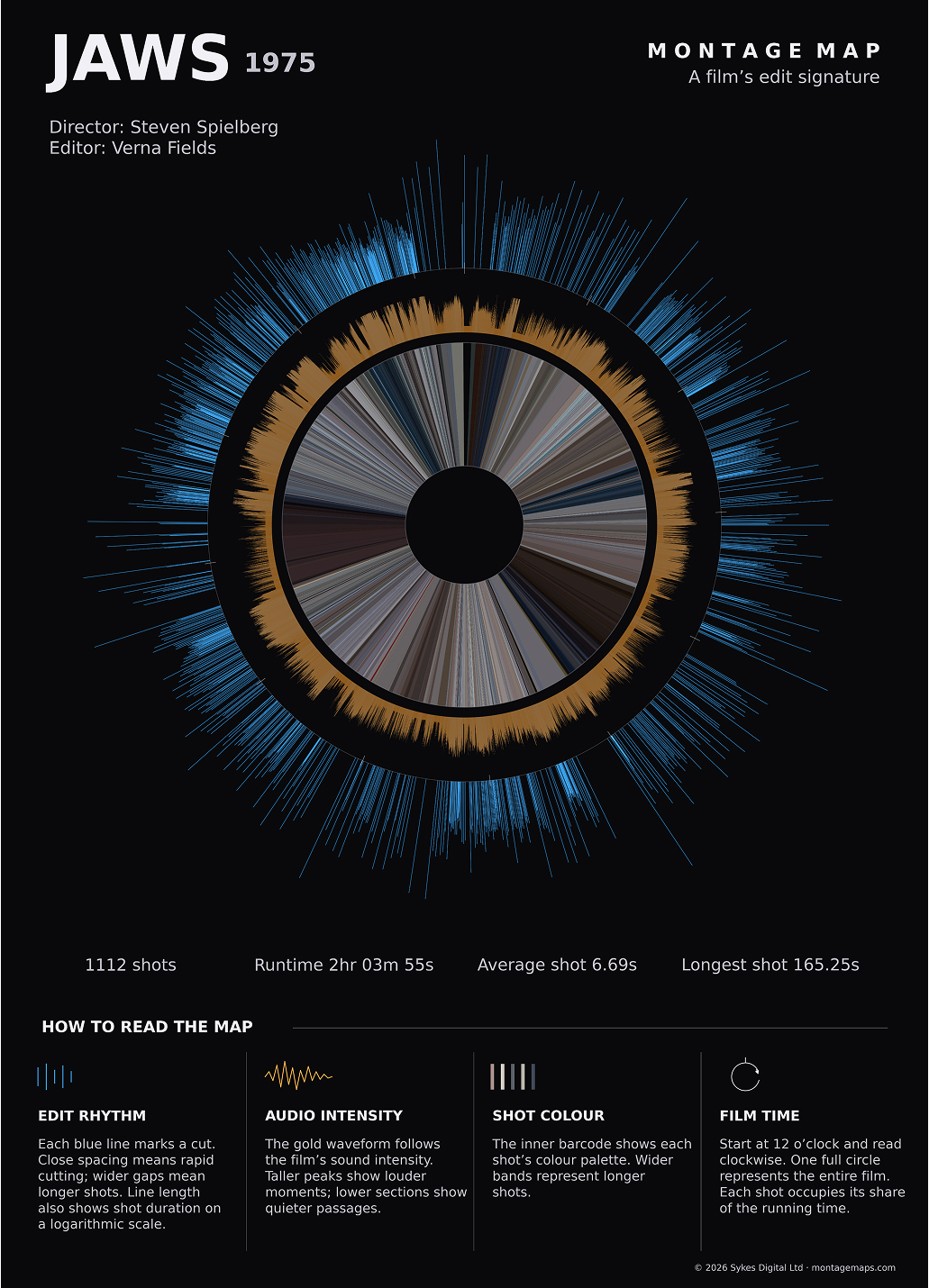
_CLEAN_montage_map.png?v=20261014-web1)
_map_shots.png?v=20261014-web1)
_map_audio.png?v=20261014-web1)
_map_colour.png?v=20261014-web1)